

Whale Accumulation Signals Imminent Ethereum Price Breakout: An Actionable Guide
Table of Contents:
- Introduction: The Compressed Spring
- Whale Accumulation Fuels the Ethereum Price Breakout
- Derivatives Skew: Why 70% Long Positions Matter
- Technical Analysis: The $3,000 Barrier and Liquidity Sweeps
- Long-Term Impact and Ecosystem Growth
- Investor Action Plan: Trading the Breakout
- Conclusion & FAQ
The crypto market is currently witnessing a fascinating divergence in Ethereum (ETH). While the price remains compressed below the critical $3,000 psychological level, underlying on-chain metrics suggest that a massive Ethereum price breakout is not just possible, but highly probable. Within the first 30 words of this analysis, we reveal the core insight: large institutional whales have quietly accumulated over $2 billion worth of ETH, simultaneously tightening the available supply on exchanges. This monumental accumulation shift, combined with record-high leverage positioning, creates a ‘compressed spring’ scenario. For the professional trader or serious investor, understanding these dynamics is crucial for capitalizing on the inevitable volatility. This deep-dive guide provides the technical and fundamental analysis required to navigate the coming Ethereum price breakout and position your portfolio for maximum gains, while mitigating the associated risks.
Whale Accumulation Fuels the Ethereum Price Breakout
The recent flow data paints a clear picture of institutional conviction. Despite muted price action hovering near $2,900, major whales—including the ’66k ETH Borrow Whale’ and treasury funds like Bitmine—have aggressively added hundreds of millions of dollars in Ether. Bitmine alone now holds 4.06 million ETH, representing over 3.37% of the total supply. This isn’t speculative retail buying; this is strategic, deep-pocketed accumulation that signals confidence in a significant upward trajectory.
This accumulation strategy has two critical effects that directly contribute to the potential for an Ethereum price breakout. First, it removes massive amounts of ETH from circulation, making the asset deflationary in practice, if not entirely in policy. Second, it reduces the exchange supply ratio. Data shows that ETH’s exchange supply ratio on Binance has dropped to its lowest level since September 2024. A shrinking pool of ETH available for immediate sale means that when demand spikes, the price reaction will be disproportionately sharp, accelerating the Ethereum price breakout.
Derivatives Skew: Why 70% Long Positions Matter for the Ethereum Price Breakout
The derivatives market provides the fuel for the coming volatility. Hyblock Capital data confirms that approximately 70% of global net Ether positions are currently net long. Simultaneously, the Estimated Leverage Ratio (ELR) for ETH has reached an all-time high of 0.611. This combination of high conviction (70% long) and high leverage creates a volatile environment. While high leverage introduces liquidation risk, the overwhelming bias toward long positions suggests that market participants are overwhelmingly betting on the Ethereum price breakout.
Pro Tip (BullRunKR Insight): The divergence between tightening supply and elevated leverage is the key signal. If the price sweeps lower liquidity (e.g., a quick dip toward $2,600) to liquidate overleveraged longs, the subsequent bounce will be ferocious due to the lack of sell-side liquidity. Conversely, a clean break above $3,000 will trigger a massive short squeeze, immediately propelling the Ethereum price breakout toward $3,400 and beyond.
Technical Analysis: The $3,000 Barrier and Liquidity Sweeps
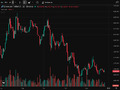
From a technical standpoint, ETH is currently compressed below the $3,000 resistance and the 200-period Exponential Moving Average (200-EMA). While this structure typically favors downside continuation, the fundamental divergence mentioned above overrides standard technical indicators. The market is coiled.
The critical levels to watch are $3,000 (resistance) and $2,600 (swing lows/support). A successful move that closes above $3,050 on the daily chart confirms the Ethereum price breakout. If the market makers attempt a ‘liquidity sweep,’ they will target the stop losses clustered below $2,750, potentially pushing the price briefly toward $2,600. This $2,600 level represents a high-conviction buy zone for whales who have been accumulating at cost bases close to prevailing market prices.
The analysts are seeing an ‘upward breakout’ as ETH returns to the $3K level, confirming the bullish sentiment. Read the full report on BeInCrypto here.
Long-Term Impact and Ecosystem Growth
The implications of this sustained accumulation extend far beyond a short-term pump. Ethereum’s role as the foundational layer for DeFi, NFTs, and RWA (Real-World Assets) integration means that institutional adoption is structurally bullish. The continuous accumulation by whales who have not taken profits in this cycle indicates a long-term view that ETH is significantly undervalued relative to its utility and future cash flows. This sustained demand ensures that the Ethereum price breakout, once initiated, will likely be the start of a multi-month trend rather than a fleeting spike.
Furthermore, a strong ETH performance acts as a gravitational anchor for the entire Altcoin market. A confirmed Ethereum price breakout above $3,400 will likely signal the start of a broader ‘Alt Season,’ offering significant opportunities across the ecosystem. Investors should view this accumulation phase as a final window before the market transitions into a high-momentum environment.
Investor Action Plan: Trading the Breakout
To make money from this impending move, you must define your entry and exit strategies clearly. The current setup offers two primary actionable strategies:
- The Conservative Entry: Wait for a confirmed daily candle close above $3,050. This confirms the resistance flip and minimizes the risk of a liquidity sweep. Target 1 (T1) is $3,400; T2 is $3,800.
- The Aggressive Entry (Risk/Reward): Place bids near the swing low liquidity zone, specifically between $2,650 and $2,700. This capitalizes on a potential shakeout before the true Ethereum price breakout occurs. Use a tight stop-loss below $2,550.
Risk Management: Given the high leverage in the market, expect volatility. Avoid using excessive leverage yourself. The expected gains from a successful Ethereum price breakout are substantial (25-40% in the short term), justifying a spot or low-leverage futures position. Explore more Crypto Investment Strategies at BullRunKR.
Conclusion & FAQ
The stage is set. The convergence of whale accumulation, derivative positioning skewed 70% long, and tightening exchange supply provides overwhelming evidence that the market is preparing for a significant move. The current price compression is merely the calm before the storm. Investors who position themselves strategically now, respecting the key technical levels of $2,600 and $3,000, stand to benefit immensely from the confirmed Ethereum price breakout. Do not mistake the current consolidation for weakness; it is the necessary phase of institutional loading before the next major leg up.
What is driving the current ETH accumulation?
The current accumulation is driven by large institutional whales and treasuries, who are adding billions of dollars worth of ETH. They are motivated by the long-term utility of the Ethereum network and the belief that the current price does not reflect its fundamental value, signaling an imminent Ethereum price breakout.
How does high leverage affect the Ethereum price breakout potential?
High leverage increases volatility. While it suggests strong bullish conviction (70% net long), it also creates large clusters of liquidation points. If the price moves upward, these liquidations fuel a short squeeze, accelerating the Ethereum price breakout. If it dips, it creates a high-risk buying opportunity.
What are the critical price levels to watch for confirmation?
The most critical level is the $3,000 resistance. A decisive daily close above $3,050 confirms the bullish momentum. On the downside, $2,600 acts as major support and a potential liquidity sweep zone before the true Ethereum price breakout begins.