The Aave Controversy: Why Investors Must Understand DeFi Governance Risks
The recent uproar surrounding Aave’s decentralized autonomous organization (DAO) and its founder, Stani Kulechov, serves as a critical case study for every serious crypto investor. While Kulechov vehemently denies purchasing $15 million in AAVE tokens to sway a controversial governance vote—stating, ‘This is my life’s work, and I am putting my own capital behind my conviction’—the incident lays bare the systemic vulnerabilities inherent in decentralized finance. Understanding these **DeFi Governance Risks** is no longer optional; it is fundamental to capital preservation in the volatile DeFi sector. This exhaustive guide dissects the Aave situation, analyzes the technical implications of token influence, and provides actionable strategies for navigating the complex landscape of DAO governance.
The core conflict revolved around intellectual property (IP) rights and the redirection of fees from the CoW Swap integration, which some community members argued rightly belonged to the DAO, not Aave Labs. When a proposal to bring brand assets under DAO control failed, with over 55% voting ‘nay’ or abstaining, the community’s frustration boiled over. This event highlights a fundamental paradox: how decentralized can a protocol truly be when the interests of the core development team (Aave Labs) clash with the collective interests of token holders? This tension is the epicenter of all major **DeFi Governance Risks**.
Unpacking the Aave DAO Conflict: The Core of DeFi Governance Risks
The Aave incident is a textbook example of how concentrated token ownership can undermine the spirit of decentralization. In a DAO, voting power is proportional to the number of governance tokens held. While this mechanism is designed to align incentives, it also creates a vulnerability known as ‘whale dominance.’ When a founder or a large entity acquires a significant stake, even if their intentions are benign, the perception of fairness and true decentralization is shattered. This is one of the most pressing **DeFi Governance Risks** facing major protocols today.
The controversy was ignited when a pseudonymous member noted that fees generated from the CoW Swap integration were directed to a wallet controlled by Aave Labs. This prompted the community proposal to secure IP rights under the DAO’s control. The failure of this vote, coupled with the timing of the founder’s substantial token acquisition, fueled accusations of foul play and centralized influence. Read the full report on BeInCrypto here.
The Mechanics of Token Whale Influence
Technically, the ability of a large holder to influence a vote is a feature, not a bug, of token-based governance. However, when the holder is the founder, the economic alignment becomes murky. If a proposal benefits the development company (Aave Labs) but potentially dilutes the value or control of the DAO, the system is tested. The key technical analysis metric here is the Gini coefficient of token distribution. High Gini coefficients indicate high concentration, which directly correlates with increased **DeFi Governance Risks**. Investors must monitor the distribution of governance tokens (like AAVE) to assess the true decentralization score.
Furthermore, the high rate of abstention (over 41%) suggests voter apathy or disillusionment, another critical factor contributing to **DeFi Governance Risks**. Low participation allows concentrated interests to exert disproportionate control, even if they don’t hold an absolute majority. This structural weakness means that even highly capitalized protocols are susceptible to internal political maneuvering that can impact long-term stability and token value.
Price and Ecosystem Impact: Assessing Long-Term DeFi Governance Risks on AAVE Valuation
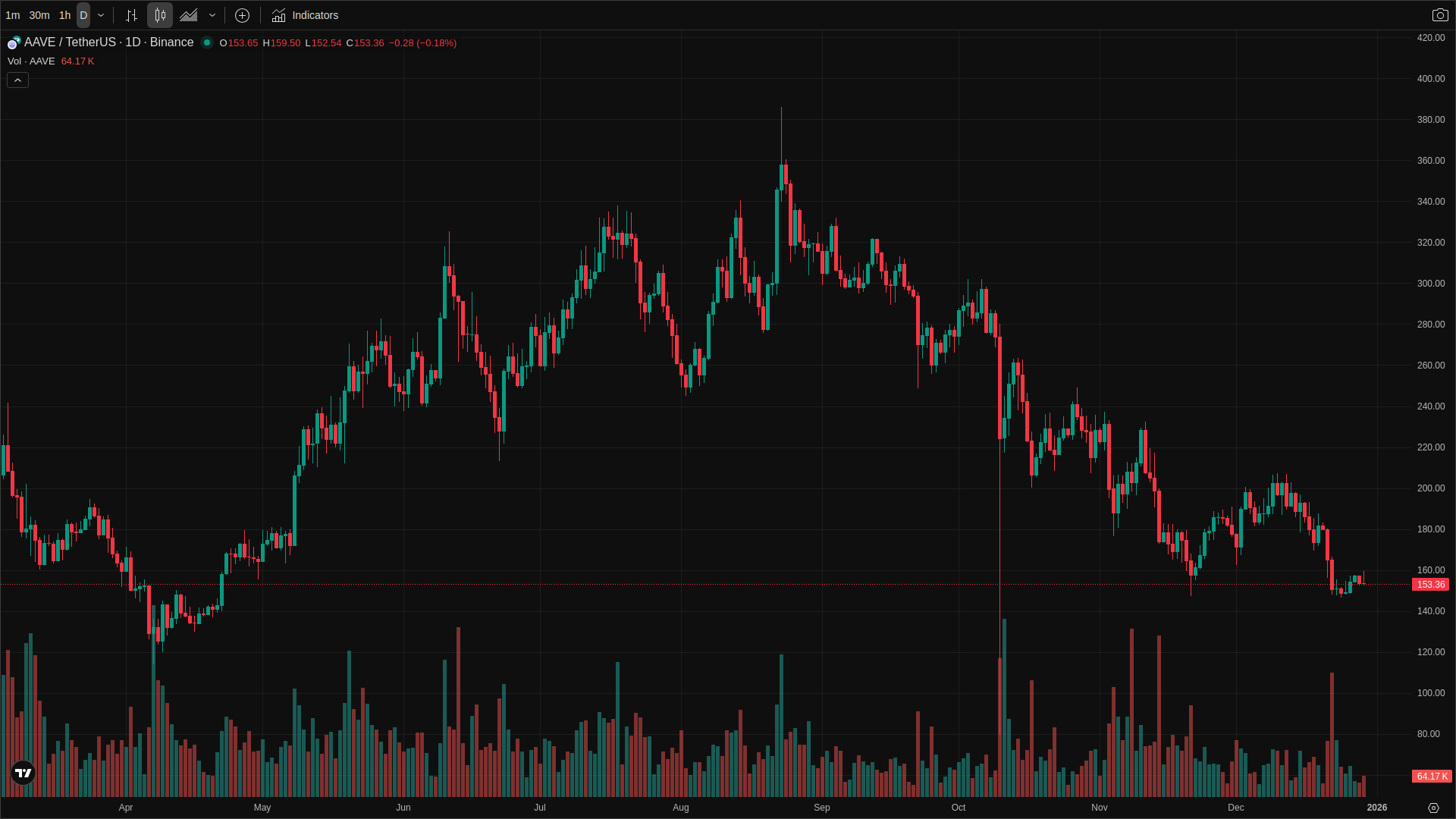
For investors holding AAVE or utilizing the Aave protocol, governance controversies translate directly into market risk. While Aave remains a blue-chip DeFi lending protocol, prolonged governance instability erodes investor confidence, potentially leading to capital flight to competitors perceived as more robustly decentralized, such as MakerDAO or Compound.
The immediate impact on AAVE’s price might be muted if the broader crypto market (BTC and ETH) is bullish, but the long-term systemic risk is significant. Governance failures introduce regulatory uncertainty. Regulators globally are scrutinizing DAOs, and incidents where centralized entities appear to manipulate outcomes provide ammunition for tighter controls. This regulatory overhang is a major component of **DeFi Governance Risks** that affects the entire Altcoin ecosystem.
If the community perceives that Aave Labs prioritizes its corporate interests over the DAO’s, developers and users may migrate. The value proposition of a DeFi protocol is its trustlessness; when trust in the governance structure falters, the protocol’s fundamental utility is challenged. Smart investors recognize that the health of the governance system is as important as the Total Value Locked (TVL) or the technical security of the smart contracts. Therefore, continuous monitoring of governance participation and token distribution is paramount when evaluating **DeFi Governance Risks**.
As a professional crypto investment partner, I advise clients to adopt a proactive strategy when dealing with protocols exhibiting high **DeFi Governance Risks**:
Due Diligence on Distribution: Before investing in any governance token, analyze the top 100 wallet holdings. If a small number of wallets control a majority of the voting power, recognize the inherent centralization risk.
Monitor Governance Forums: Actively track proposals and community sentiment on forums like Snapshot. Pay attention not just to the outcome, but to the speed and transparency of the voting process. Rushed votes, as reported in the Aave case, are a red flag.
Diversify Exposure: Do not over-allocate capital to a single DeFi protocol, regardless of its TVL. Diversification across multiple governance models mitigates exposure to protocol-specific political instability.
Adopt Defensive Trading: Use stop-loss orders when major governance votes are pending or when controversies erupt. Price volatility often follows governance uncertainty.
The Aave situation is a stark reminder that decentralization is a spectrum, not a binary state. Even industry leaders face internal struggles over power and profit. By rigorously analyzing **DeFi Governance Risks**, you can position yourself to capitalize on strong protocols while avoiding the structural pitfalls that derail others. Explore more Crypto Investment Strategies at BullRunKR.
Conclusion: Mitigating Structural Risk in DeFi
The controversy surrounding Aave’s governance vote underscores a critical lesson: the greatest threats to DeFi protocols often stem not from external hacks, but from internal political and economic misalignment. While Stani Kulechov defends his actions as a show of conviction, the resulting community uproar highlights the urgent need for clearer economic alignment between core development teams and token holders. Investors must treat **DeFi Governance Risks** as a primary factor in their investment calculus. By focusing on transparency, participation rates, and token distribution metrics, you can navigate the complexities of decentralized finance with greater confidence and secure a stronger position in the next market cycle.
Frequently Asked Questions (FAQ)
What is ‘Whale Dominance’ in a DAO?
Whale dominance occurs when a small number of large token holders (whales) possess enough voting power to unilaterally pass or reject governance proposals, effectively centralizing decision-making despite the decentralized structure.
How Does Governance Risk Affect Token Price?
Governance risk introduces uncertainty and erodes trust. This can lead to decreased liquidity, reduced usage of the protocol, and ultimately, downward pressure on the token’s price as investors seek more stable alternatives.
Is Aave Still a Safe Investment Despite DeFi Governance Risks?
Aave remains a leading protocol, but the recent events necessitate increased caution. Its safety depends on the resolution of IP and fee transparency issues. Investors should monitor Aave’s future proposals to ensure Aave Labs and the DAO achieve explicit economic alignment, thereby reducing the perceived **DeFi Governance Risks**.